What PR advice would you give Prince Andrew?

I set up a communications agency earlier this year. During a conversation last week with a prospective client about reputation management, I was asked how I would dig HRH The Duke of York out of his current predicament.

Prince Andrew is currently in limbo. In PR terms, he remains a Royal PR sore, ridiculed by the news media, pilloried on social media and still living (indirectly at least) on the public purse with no one willing to offer him work.

The toughest of tough PR gigs

For a PR practitioner, Prince Andrew would be the toughest of tough gigs. His ‘brand’ is toxic thanks to his friendship with the deceased sex offender Jeffrey Epstein. His ill-advised attempt to explain it away in an interview with respected BBC journalist Emily Maitlis was a catastrophe. And now he faces a civil lawsuit from an American woman, Virginia Giuffre, who alleges that he sexually assaulted her.

The court of public opinion has already made up its mind about Andrew – guilty of poor judgement to some, he is guilty of far worse to others.

Lawyers say there is no good legal way forward. If Andrew fights the lawsuit he will look unsympathetic. If he ignores it, he will cause collateral damage to the rest of his family and possibly even to the institution of the monarchy. Even if he settles with no admission of anything, some will still see it as an admission of something.

Start with an apology

Nothing can happen without a full and unreserved apology. And not the mealy-mouthed type he made when he announced he was stepping back from public life ‘for the foreseeable future’. Andrew has to acknowledge his own serious failings in associating with Epstein and has to admit he fell seriously short in terms of both his own judgement and the public’s expectations of a senior royal figure.

He then has to resolve his legal woes. Ms Giuffre was a vulnerable 17 year old – and thus a minor in the eyes of the US legal system – when they were photographed together at Ghislaine Maxwell’s London mews house in 2001. Andrew could apologise for the distress his association with Ms Giuffre caused her without admitting to any sexual activity. However, this will depend on a legal settlement and a generous financial offer to her. Only then would the damaging drip-feeding of allegations in the media stop and enable both sides to draw a line somewhere.

Legal settlement is essential

In the wake of a near total mea culpa and a legal settlement, something like internal exile and some form of charitable work is possible for Andrew. No public events, no waving from the balcony at Buckingham Palace, no media appearances, no more riding with the Queen, no more Air Miles, no golf. Some have suggested sending him to Africa as a charity worker but this would have bad optics. Andrew would be the very worst kind of ‘white saviour‘. He needs to find an appropriate charity in the UK and devote his life to it.

The only public figure whose example sets anything like a precedent would be the disgraced politician John Profumo. The then Secretary of State for War was forced to resign in 1963 after it emerged that he had lied to Parliament about a sexual affair with Christine Keeler, a model who was also in a relationship with the naval attache at the Soviet Embassy. Profumo later went to work for a charity in the East End of London and maintained an absolute public silence on the matters that led to his resignation. This redeemed Profumo to some and the media more or less left him alone to his good works for the rest of his life.

What is the best he can hope for?

Nothing Prince Andrew has said or done suggests he fully understands his current predicament. His former PR advisor resigned after the Prince rejected his advice not to go ahead with his ill-fated interview with the BBC. No one in their right mind will take Andrew on as a client until he accepts that he has transgressed and that he needs serious help. Once he does, he will have to work hard to cease being newsworthy. That is the best he can hope for.

Photo by Anika Mikkelson on Unsplash

How language changes: an ode to emojis

When I was younger I greatly admired the British journalist Miles Kington, who was credited with the invention of Franglais, a made up language that combined French and English.

Yes, I know, Shakespeare had examples of it in his writing, Monty Python had a sketch using it…but Kington really was the grande fromage of them all, IMHO.

Vous gettez the drift générale. Franglais was absolument nonsense of course, and while it might have instilled de la confiance in the average Rosbif, armed with the mighty French O Level (grade C), it utterly confused any French person who read it.

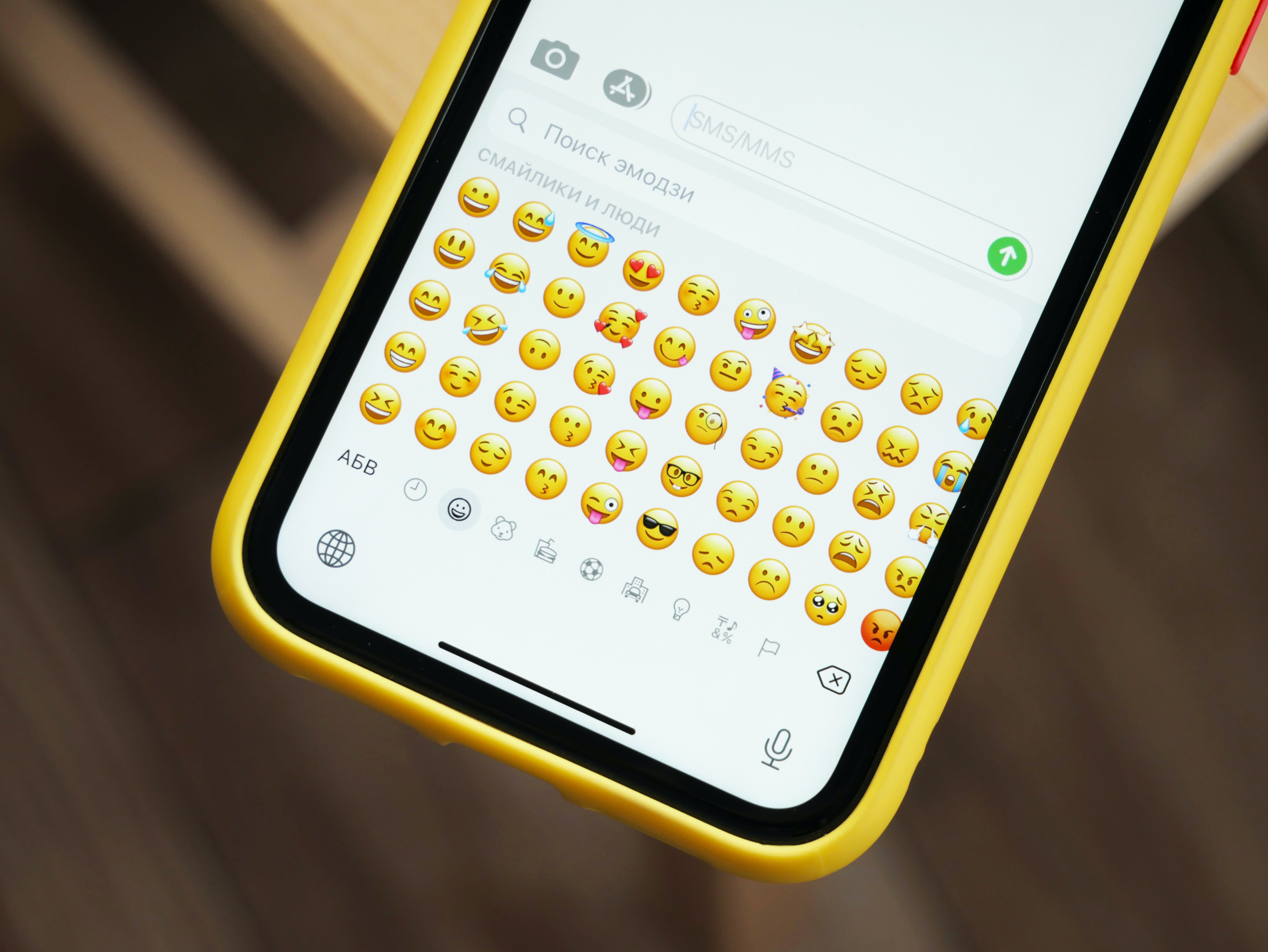
So, I’d love to know what Kington would have made of emojis. Why? Because Saturday is world emoji day. 🙌 World emoji day – who knew it was ‘a thing’?

Actually, it’s more than 20 years since the very first tiny emotive characters appeared on Japanese mobile phones. There are now many thousands of them and they have gone mainstream, across cultures and languages, even leaping from casual use to the professional.

The first time I saw one at work was when an investor relations adviser wanted to include 😃😃😃 in a financial results press release. When I suggested that the company should stick to ‘tried and tested’ language rather than emojis, I was told in plain terms that I was clearly ‘quite old’ and ‘didn’t get’ what they were all about. 🤦

Actually, I believe Emojis are a vital part of linguistic evolution. Just as I don’t address my partner as ‘thou fair maiden yonder’ so too in our increasingly digital communications space we are always on the lookout for new ways to express ourselves, and emojis are ‘it’.

Emojis convey a very basic thing well…that emotional nuance which can alter the plain text in which they appear. And that’s a very good thing.

We all know that texting is a hopeless way of communicating emotion. Once, in the early stages of dating a new partner, I was temporarily dumped because my texts apparently did not convey enough interest. If only I’d used a ❤️, I could have avoided some, er, heartache.

Sarcasm is particularly difficult with texts too…because you don’t hear that cutting tone or, when you think it is there, you risk overreacting. A 🤷 or an 🙄 followed by a 🤣would convey so much more – the other person is slightly irritated, but 🆗.

That’s not to say emojis are always welcome. I’ve seen bullies use smileys at the end of an unpleasant work email, a sort of passive aggressive language that allows them to be really mean while hopefully stopping just short of what is required for a harassment lawsuit. 👨‍⚖️

All this means we expect more and more from emojis as we seek to avoid causing offence or a misunderstanding, something that remains as important now as it did in Shakespeare’s day. This means emojis will continue as vital linguistic tools. A digital lingua franca, if you like. I’m sure Miles Kington would have liked that one.

Photo by Denis Cherkashin on Unsplash

(By the way, I’m a professional storyteller and run Portman Communications, a content and reputation management company in Switzerland. We work for clients all over the world. If I can help with your content or communications needs, get in touch!)

Return to work? But I was never away!

Commuters pictured at a major railway station in London

My clothes don’t fit. I spent too much time looking in the fridge when I was working from home during the COVID pandemic and now I’ve got a ton of weight to lose.

If this is you, I sympathise. I’m sure you are not alone.

Working from home certainly has its advantages – no commute, more time for yourself and no need to dress up beyond an appropriate top.

But there is a significant downside, and it’s not the extra pounds you may be carrying thanks to the magnet-like appeal of a well-stocked fridge. The real problem is the tyranny of the ‘always-on’ culture of home-working, which has increased pressure on those who feel they need to ‘show’ bosses that they really are working by exhibiting a level of presenteeism that even Gordon Gekko* would frown on.

Years ago I worked for a major organisation where home-working wasn’t just frowned on. It was actively discouraged. “If you’re not ‘at work’, you’re not working,” said my then boss as she insisted I took a day off when I asked to work at home so a technician could come and service my boiler.

I see this very organisation now says working flexibly can be a permanent option for office-based employees and that they just have to inform their manager of their intention to work remotely rather than request permission to do so.

That’s great, so long the downside isn’t having to be ‘always-on’, though I find it hard to believe my old boss will have changed her tune all that much.

For me, as the head of a communications agency, having colleagues I can rely on is essential. But I don’t expect 24-7 service. If I happen to be banging out emails at 11pm on a Friday, it doesn’t mean I want – or expect – them answered by return. I try to respect boundaries. I don’t want to impinge on colleagues’ home time.

At the same time, I trust my colleagues to know when a client needs their urgent response. I also know that the flexibility of home working means one of them doesn’t work in the afternoons for childcare reasons but instead logs on in the evenings to finish stuff off. I tailor my expectations accordingly.

All of which is why I grimace when I see headlines that talk about the big ‘return to work’. Honestly, what do they think everyone has been doing for the past months?

My colleagues have been hard at work, just not ‘at work’.

* Gordon Gekko was a fictional character in the 1987 movie ‘Wall Street’. Played by Michael Douglas, who won an Oscar for his portrayal as the hard-working, hard-talking financier, he famously declared ‘Lunch is for Wimps’.

Photo by Anna Dziubinska on Unsplash

The greatest gaffe ever – 30 years on

Gerald Ratner Tweets his regret about making 'that' speech 30 years ago to the Institute of Directors in the UK

It’s exactly 30 years since Gerald Ratner, Chief Executive Officer of the eponymous jewellery business stood up at a conference of the UK Institute of Directors and made a few jokes at the expense of some of his company’s best-selling products.

He described a set of cut-glass sherry decanters that Ratners Group sold for £4.95 as ‘total crap’ and joked that while a set of earrings was ‘cheaper than a prawn sandwich from [the UK retailer] Marks & Spencer’…‘I have to say the sandwich will probably last longer’.

Hundreds of millions of pounds were wiped off Ratners Group’s market value as shoppers deserted the company – and Gerald Ratner’s remarks became a classic in the reputation management genre.

Ratner, who now works as a motivational speaker, amongst other things, said his remarks weren’t meant to be taken seriously and blamed the media for over interpreting his words.

As I’ve reminded executives many times when delivering communications training, the media are not to blame here.

Many is the executive who’s slipped up by trying to be too clever or, worse, trying to be funny. Leave the jokes to the comedians, is always my advice.

The story is whatever the journalist decides it is. I tell clients, ‘Don’t expect them to see past your joke. Or to overlook a remark that is inadvertently funny.’

‘I want us to be as well-known as Disney,’ declared the then head of the Institute of Management Consultants as he spelt out his marketing goals to members at the organisation’s annual dinner a few years ago.

‘IMC President wants institute to become Mickey Mouse Organisation’ read the headline of my diary column that week.

I was standing next to the institute’s public relations adviser as I wrote his remark down. I saw her cringe at his words. Either she hadn’t advised the President properly or, much more likely, he hadn’t listened to her advice to take that comparison out. Big mistake. Huge.  

How to spot an offshore financial con

A Swiss street scene

There’s a book that all aspiring investors should read. It’s called “Where are the customers’ yachts?” and the sub-title is ‘A Good Hard Look at Wal Street’, by Fred Schwed Jr.

Schwed was a stockbroker and an author, his book is still, some 80 years after its first publication, described by leading investors like Warren Buffet as a timeless and authentic description of the investment culture on Wall Street.

The title refers to the supposed question a visitor to New York posed on seeing rows of luxury boats belonging to bankers and brokers.

It is a slightly tongue-in-cheek study of what is wrong with the investment business, a coruscating look at the finance industry. Today, if Schwed were still alive, his book might be entitled ‘Where were the regulators?’ because it is clear that the silver-tongued financial services salespeople (let’s not call them investment advisers, that suggests they have your interests at heart) continue in business unchecked. The regulators are basically asleep on the job.

Even in Switzerland, regulators have failed to deal with offshore wealth managers who target expatriates living here

Want to make a million quickly? Come up with a complicated fraud and diddle lots of people. Leave a complex money trail across multiple jurisdictions and most regulators will spend years working out who has the authority to investigate cross-border transgressions before they do anything as mundane as starting to look for you.

So, why am I writing about this? Well, it’s only the second working day of the year today and already I’ve had six phone calls from financial services companies falsely claiming to be ‘following up on our emails’ and ‘further to our discussions last year’. Six. In two days.

Cold calling is an invariable red flag for me. What a shame there are precious few others I could refer to, like a comprehensive international listing of every conman ever penalised for investment fraud or breaching regulatory requirements in any major jurisdiction across the world. What a service that would be.

Such a book doesn’t exist. Because regulators aren’t interested. It’s too much like hard work for them.

So the age-old warnings must apply:

Continue reading