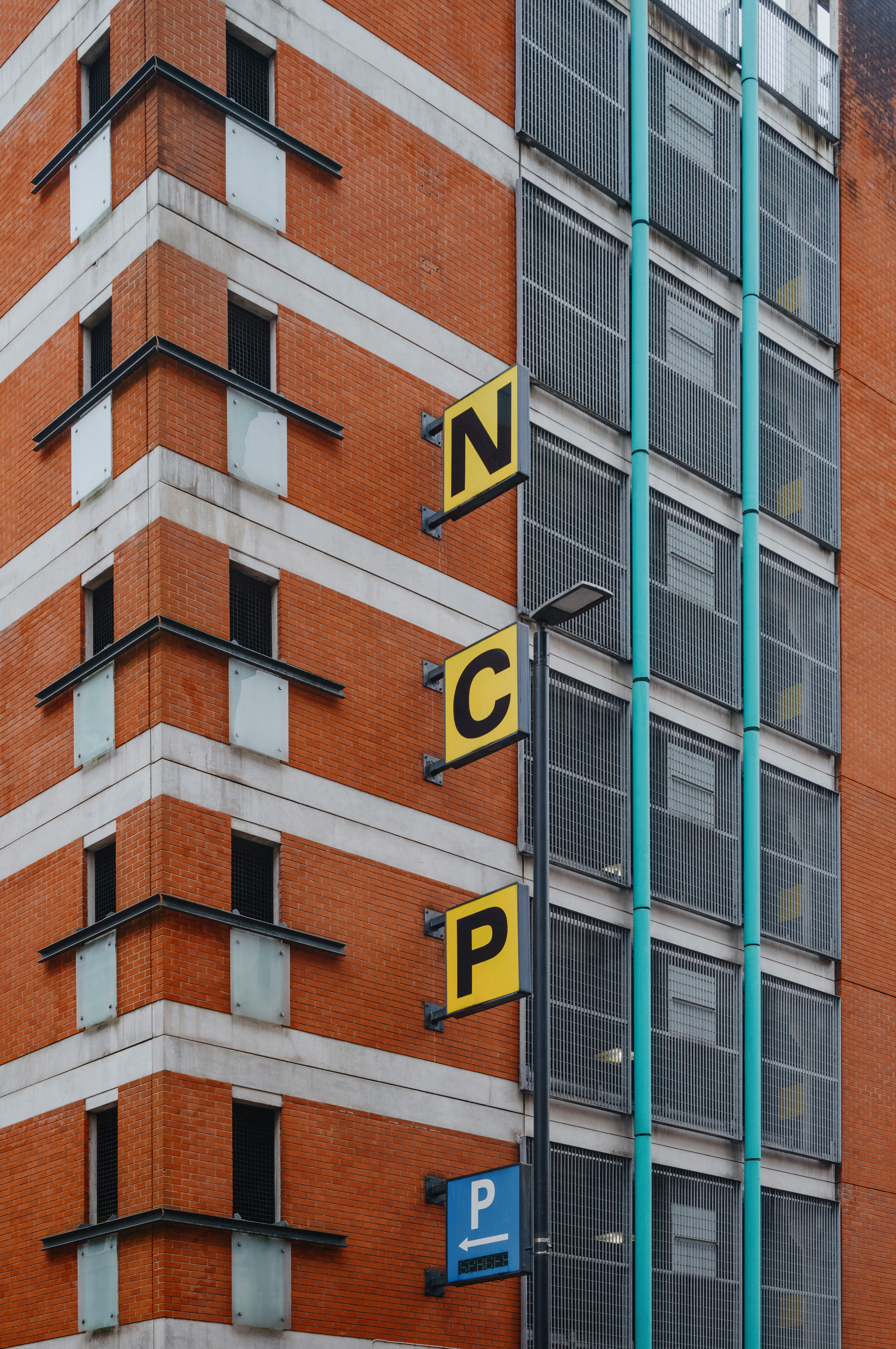
The German language has a great word to describe the public reation to the collapse of NCP, once the dominant name in British parking. It’s Schadenfreude, literally ‘the satisfaction one takes in the misfortune of others’. The failure of NCP has triggered a wave of such satisfaction.
For many people, the company’s fall into administration feels less like an unfortunate casualty of shifting commuter habits and more like the inevitable consequence of a corporate model that pushed customers to the limit for too long.
For years, NCP symbolised a kind of unavoidable urban frustration: high charges, confusing tariffs, aggressive enforcement, and the sense that convenience came at whatever price the company felt it could get away with.
I should declare an interest. My partner received a stiff fine for overstaying her welcome in a London multi-storey run by NCP by five minutes. Her defence was the presence of two very drunk aggressive men sitting on the floor by her car. She didn’t feel safe walking alone to her vehicle. There was no one in the ticket office who could help, and although a random passerby did step in, NCP still issued a penalty and rejected her excuse as ‘groundless’.
So being worried about your personal safety is not a defence. Good to know.
This is why, as the administrators were pointing to structural losses such as ‘inflexible leases’ on some NCP sites plus the long tail of the pandemic, the public conversation has focused on something basic: trust. Or rather, the lack of it.
Convicted in the court of public opinion
When a company becomes shorthand for overcharging, it loses the reservoir of goodwill that might otherwise soften the blow when times get tough. Instead of rallying behind a familiar brand, many people have responded with a shrug or, worse, a sense of poetic justice. The comments section of today’s NCP story on the Daily Mail website, that well-known barometer for public opinion, is full of posts that start ‘Hahahahahaha’. That reaction may feel harsh, especially for the 682 employees now facing uncertainty, but it reveals something important about how consumers judge corporate behaviour.
People are increasingly unwilling to support businesses that treat customers as captive revenue streams rather than partners in a long‑term relationship. In an era where alternatives are only ever a few taps away, loyalty has to be earned, and pricing is part of that. When companies push too far they sow the seeds of long‑term vulnerability.
NCP’s collapse is a reminder that public support is not a given. Once it’s lost, it cannot be summoned back in a crisis. It’s a timely reminder for everyone in corporate communications.
Every communications adviser knows there are moments when their job shifts from shaping a message to quietly bracing for impact. I have a real-life example from early in my communications career.
A senior executive stood in front of a room full of his employees, announced they were – sadly – all being made redundant, and then, beaming, shared that he’d just been promoted.
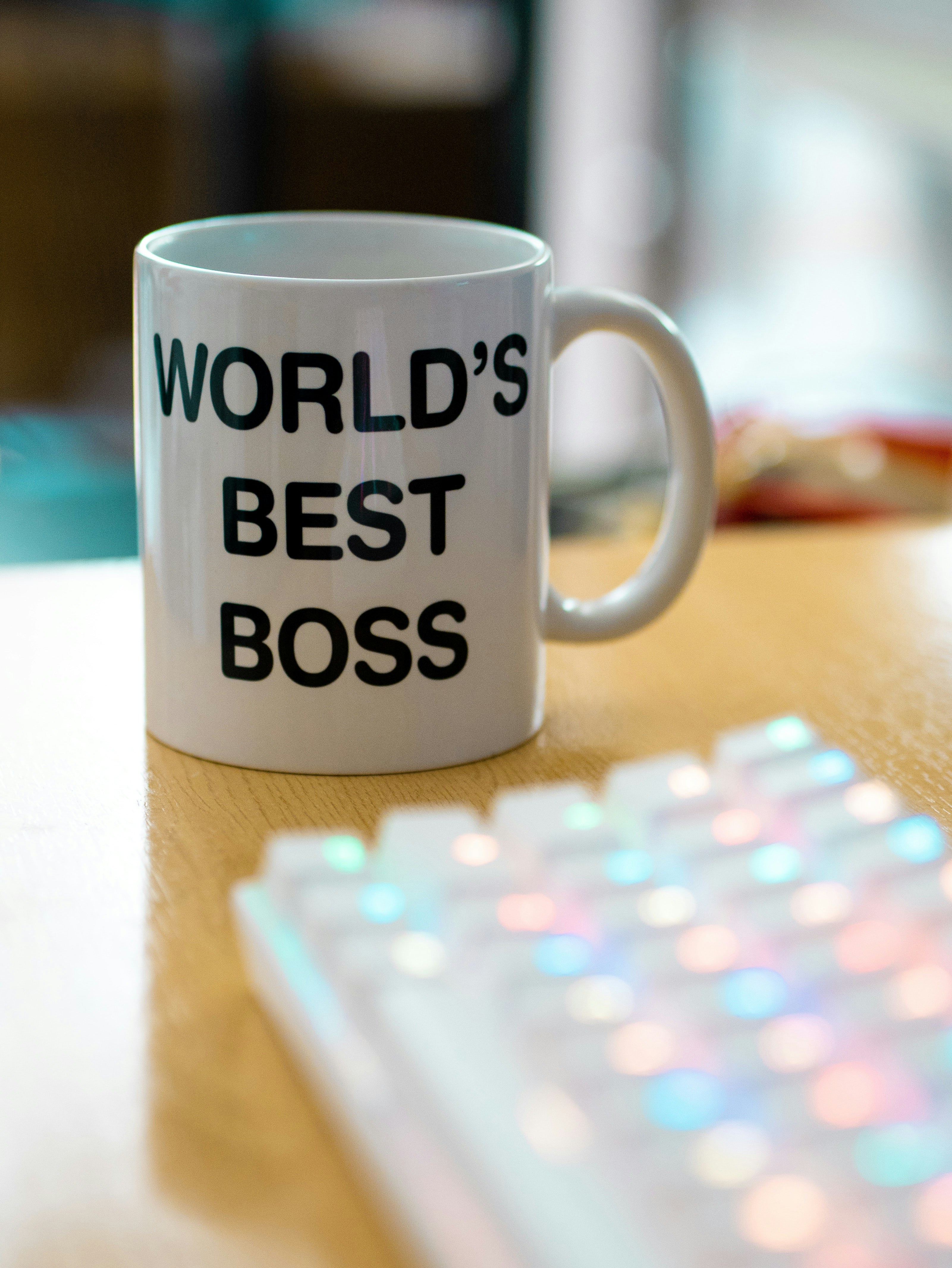
“Every cloud has a silver lining,” he added, as if delivering a line from a corporate pantomime. It was a pure David Brent moment: excruciating, tone‑deaf and instantly unforgettable. (David Brent, if you don’t know, is the hapless, out-of-his-depth corporate manager portrayed in Ricky Gervais’s excoriating series The Office, also reshot for the US market with the brilliant Steve Carell in the lead.)
What makes these gaffes so damaging is that they reveal something PR can’t fix: character. A poorly worded memo can be rewritten. A clumsy interview can be reframed. But when an executive publicly displays a catastrophic lack of empathy, the problem isn’t the message, it’s the messenger. No amount of media training can retrofit emotional intelligence into someone who doesn’t instinctively understand the weight of their words.
These moments also spread with remarkable speed. Employees these days could record them and share them on social media. Fortunately my example took place long before 4G and iphones became a thing.
Still, our executive’s faux pas was leaked to the Guardian newspaper and was published long before the communications team had even drafted a holding statement. By the time PR arrived to mop up, the story had already become a symbol: of arrogance, of detachment, of leadership gone wrong. And symbols are far harder to manage than stories.
The deeper issue is that executives often underestimate how closely people watch them. In times of uncertainty, every gesture is amplified. A misplaced joke becomes a verdict on leadership. A careless aside becomes evidence of indifference. When livelihoods are at stake, humour is not a bridge, it’s a trapdoor.
This is why the most effective protection for executives isn’t spin; it’s self‑awareness. The ability to read a room, to understand the emotional temperature, to recognise when silence is wiser than wit. PR can polish, guide and prepare, but it cannot save someone determined to sabotage themselves in public.
The lesson is simple: leaders don’t just communicate strategy, they communicate values. And when those values appear hollow, no adviser on earth can put them back together.
First, a full confession: I used to write about tech startups in the dotcom boom. I met hundreds of internet entrepreneurs, financiers, self-styled tech wizards and gurus. Some were brilliant and deserved their eventual success, while others I thought were ‘fake it till you make it’ pretenders still managed to extract funding from desperate venture capitalists before their businesses went belly up.
I know better than most what goes wrong when journalists are trying to write in boom times. As in all gold rushes, media coverage can veer from the excited to the positively breathless. I’ve seen reporters get carried away. And, after the bubble bursts (which they all do), everything changes, the media sharpens its claws, and everyone associated with the boom gets a kicking, all of them tarred with the same brush, whether they deserve it or not.
So far, so dotcom boom.
Back in the UK in 2000 after the ‘correction’ in tech company valuations, things soured to the point that Lastminute.com’s founders Martha Lane Fox and Brent Hoberman, who I interviewed several times, briefly became totemic figures for public and investor disillusionment with the tech sector.
Once, mid-way through an interview some time after the oversubscribed Lastminute IPO and the subsequent crash in tech stocks, a weary Hoberman told me he wouldn’t have minded so much if journalists just slagged off the company. Much of the media animus directed at him and Lane Fox, however, was so personal that it was as if reporters thought there was something wrong with them as individuals.
Unquestioning coverage helps no one, fair coverage does
How things changed over the following years. Media coverage of tech startups resumed its previous unquestioning stance. In the US this trend was particularly notable. Partly driven by their owners’ demands for page views and that other all-important commercial driver, ‘reader engagement’, journalists outdid each other in their glowing coverage of the people and companies coming out of Silicon Valley.
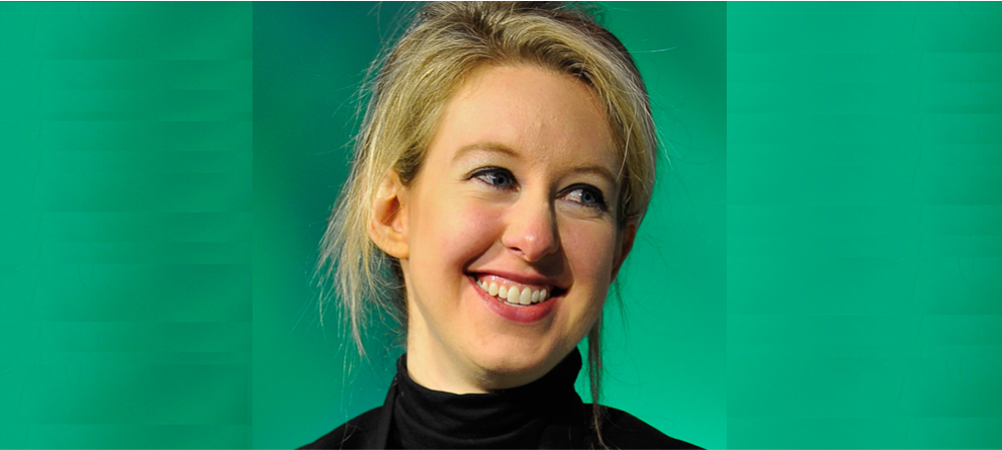
Elizabeth Holmes rode this wave like a pro. In 2003 the then 19-year-old founded the company that would become Theranos, eventually raising more than $700 million from investors and commanding a heady $9 billion valuation within a decade. It took till 2015 before the Wall Street Journal (behind paywall) published the first damaging revelations about Theranos’s technology, leading to legal challenges on all fronts and the company’s eventual collapse.
With Holmes’s conviction yesterday on four charges of fraud, including conspiracy to defraud investors, the question has to be asked: why did it take so long to uncover what the US Securities and Exchange Commission described as a “years-long fraud”?
Puffing up Elizabeth Holmes
The media has a lot to answer for. It puffed up Elizabeth Holmes. Hailed her as a guru. Lapped her up and promoted her as the great fresh face of tech entrepreneurs. She became one of the most idolised, most revered female entrepreneurs in the tech industry.
Her image graced the covers of business magazines and fashion titles alike. Even her dress sense, which aped Steve Jobs and his signature black turtleneck jumpers, was somehow seen as a sign of excellence.
Now, post Theranos, journalists seem to be belatedly regaining their credentials as people who realise they have to hold companies and their leaders to account. Critics will say this is no more than ‘doing a reverse ferret’, journalese to describe an abrupt reversal in an organisation’s editorial or political line on a particular issue
The media does now seem to acknowledge that the tech industry is not a just a world populated by aspirational and well-meaning geeks who run startups from the spare bedroom of their parents’ houses. But it’s a very late-in-the-day realisation that some of these people do wield real world power, whether it’s through commercializing our personal data, facilitating those who undermine elections, or what some might paraphrase as ‘doing stupid stuff’.
Many of the journalists who wrote flattering articles about Holmes back in the day clearly regret it now, even if they don’t say so. Fortune Magazine, to cite just one culprit, wrote this generous profile back in 2014 and published this creditable and lengthy mea culpa a year later. Wired did this one – but try finding their mea culpa or those of others.
So why did the media swallow Holmes’s hype? I’d argue subsconscious bias may have been at work.
Did male journalists just get carried away with this female CEO?
The male/female dynamic is far too simplistic an explanation.
Holmes certainly looked the part. She dressed the part. She talked the talk. She had big name investors. She amassed a star-studded board of directors. She did also tick a lot of the boxes for the many male, often middle-aged business journalists out there looking for a ‘good story’: Blonde. Female. Charismatic. Dropped out of a prestigious university to launch her business. Dressed like Jobs. Had a deep voice (honestly, even that’s been questioned). Made journalists feel special by maintaining extraordinary eye contact (seriously, there are even articles about how she likely taught herself to do this). Oh, and the technology her business did sounded sort of cool and game-changing.
But the reality is that at one time all journalists, whatever their gender, were gushing about her.
Some argue that Holmes’s ought not to be the only conviction here. The media is also guilty – of monstrous hype. Of misleading its audiences. Perhaps even of overlooking a fraud through its failure to probe sufficiently and ask hard questions.
Will it learn any lessons? Could the media make the same mistake again? We could be charitable and hope some lessons can be learned from the Theranos saga. Maybe, then, the next time a big investor wave comes along the media won’t just sweep us along in their excitement. We can but hope. But there are few signs to be all that confident.
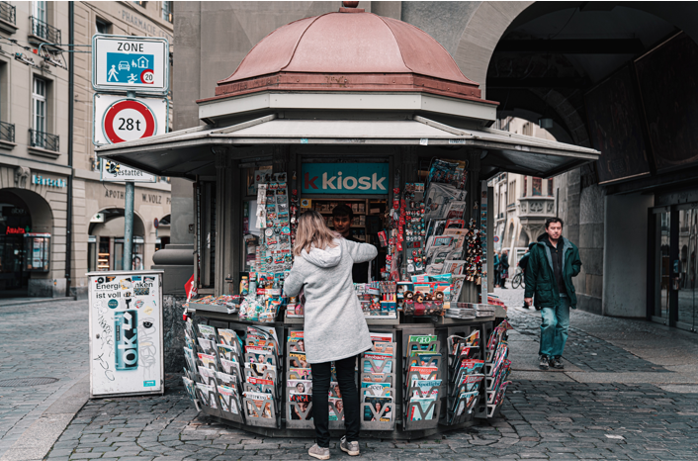
One of the features of the Swiss media market that first strikes foreigners is the apparently robust health of its print media. Newsagents seem packed with titles and relatively high levels of newspaper and magazine readership sit at odds with the experience in other major European countries.
The pandemic has emphasized the rate of change, hitting both print circulation and advertising as lockdowns cut the numbers of people buying papers on the journey to and from work.
Newspaper industry revenues are expected to fall from CHF 968 million in 2020 to CHF 842 million by 2025, a drop of -2.3% annually.
While major media owners are moving over to new platforms this is not without difficulty. Publishers are running into the age-old problem that users think digital equates to free content. Finding new ways of monetising digital audiences will be key if publishers are to survive.
Competing with TikTok and Snapchat
Media companies are shifting to digital models, producing more audio and video content, but even so they will have their work cut out to compete for revenue and reader attention from established rivals such as Google and Facebook to emerging forces like TikTok and Snapchat.
There have been some successes: The free German-language tabloid Blick launched in francophone Switzerland in June. Its owner, Ringier, has also launched an online TV channel. Meanwhile, the biggest online news site in French – http://www.20min.ch/fr – increased audiences across its various channels (print newspaper, app and website) in 2020 to reach nearly 3.0mn readers each day.
That’s pretty impressive when you consider the country has a population of just 8.7 million, though it reflects traditionally high level of news readership and the fact that trust in traditional news sources here remains high at 44%.
Online advertising is the place to be, however. Switzerland’s Internet advertising market is already the sixth biggest in Western Europe, with total revenue of CHF 3.2bn in 2020. This is expected to increase at a combined annual growth rate of 6.5% to reach CHF 4.4bn by 2025, making Switzerland the third-fastest growing market in the region.
The impact of 5G
While online advertising continues to grow, PwC sees a surge in mobile ad revenue following the increasing take-up of 5G between now and 2025.
Switzerland is something of a trailblazer for 5G in Europe. It is now available to most of the population through two major providers, Swisscom and Sunrise. Revenue from mobile ads overtook that of wired for the first time in 2019, when it accounted for 54.1% of total revenue. By 2025 mobile will make up 64.4% of total Internet advertising revenue in Switzerland.
It adds up to a huge challenge for traditional media companies, who must adapt their business models quickly, or die. Those packed news stands in Switzerland may soon become a thing of the past.
My clothes don’t fit. I spent too much time looking in the fridge when I was working from home during the COVID pandemic and now I’ve got a ton of weight to lose.
If this is you, I sympathise. I’m sure you are not alone.
Working from home certainly has its advantages – no commute, more time for yourself and no need to dress up beyond an appropriate top.
But there is a significant downside, and it’s not the extra pounds you may be carrying thanks to the magnet-like appeal of a well-stocked fridge. The real problem is the tyranny of the ‘always-on’ culture of home-working, which has increased pressure on those who feel they need to ‘show’ bosses that they really are working by exhibiting a level of presenteeism that even Gordon Gekko* would frown on.
Years ago I worked for a major organisation where home-working wasn’t just frowned on. It was actively discouraged. “If you’re not ‘at work’, you’re not working,” said my then boss as she insisted I took a day off when I asked to work at home so a technician could come and service my boiler.
I see this very organisation now says working flexibly can be a permanent option for office-based employees and that they just have to inform their manager of their intention to work remotely rather than request permission to do so.
That’s great, so long the downside isn’t having to be ‘always-on’, though I find it hard to believe my old boss will have changed her tune all that much.
For me, as the head of a communications agency, having colleagues I can rely on is essential. But I don’t expect 24-7 service. If I happen to be banging out emails at 11pm on a Friday, it doesn’t mean I want – or expect – them answered by return. I try to respect boundaries. I don’t want to impinge on colleagues’ home time.
At the same time, I trust my colleagues to know when a client needs their urgent response. I also know that the flexibility of home working means one of them doesn’t work in the afternoons for childcare reasons but instead logs on in the evenings to finish stuff off. I tailor my expectations accordingly.
All of which is why I grimace when I see headlines that talk about the big ‘return to work’. Honestly, what do they think everyone has been doing for the past months?
My colleagues have been hard at work, just not ‘at work’.
* Gordon Gekko was a fictional character in the 1987 movie ‘Wall Street’. Played by Michael Douglas, who won an Oscar for his portrayal as the hard-working, hard-talking financier, he famously declared ‘Lunch is for Wimps’.

 guy dresser