The greatest gaffe ever – 30 years on

Gerald Ratner Tweets his regret about making 'that' speech 30 years ago to the Institute of Directors in the UK

It’s exactly 30 years since Gerald Ratner, Chief Executive Officer of the eponymous jewellery business stood up at a conference of the UK Institute of Directors and made a few jokes at the expense of some of his company’s best-selling products.

He described a set of cut-glass sherry decanters that Ratners Group sold for £4.95 as ‘total crap’ and joked that while a set of earrings was ‘cheaper than a prawn sandwich from [the UK retailer] Marks & Spencer’…‘I have to say the sandwich will probably last longer’.

Hundreds of millions of pounds were wiped off Ratners Group’s market value as shoppers deserted the company – and Gerald Ratner’s remarks became a classic in the reputation management genre.

Ratner, who now works as a motivational speaker, amongst other things, said his remarks weren’t meant to be taken seriously and blamed the media for over interpreting his words.

As I’ve reminded executives many times when delivering communications training, the media are not to blame here.

Many is the executive who’s slipped up by trying to be too clever or, worse, trying to be funny. Leave the jokes to the comedians, is always my advice.

The story is whatever the journalist decides it is. I tell clients, ‘Don’t expect them to see past your joke. Or to overlook a remark that is inadvertently funny.’

‘I want us to be as well-known as Disney,’ declared the then head of the Institute of Management Consultants as he spelt out his marketing goals to members at the organisation’s annual dinner a few years ago.

‘IMC President wants institute to become Mickey Mouse Organisation’ read the headline of my diary column that week.

I was standing next to the institute’s public relations adviser as I wrote his remark down. I saw her cringe at his words. Either she hadn’t advised the President properly or, much more likely, he hadn’t listened to her advice to take that comparison out. Big mistake. Huge.  

How to spot an offshore financial con

A Swiss street scene

There’s a book that all aspiring investors should read. It’s called “Where are the customers’ yachts?” and the sub-title is ‘A Good Hard Look at Wal Street’, by Fred Schwed Jr.

Schwed was a stockbroker and an author, his book is still, some 80 years after its first publication, described by leading investors like Warren Buffet as a timeless and authentic description of the investment culture on Wall Street.

The title refers to the supposed question a visitor to New York posed on seeing rows of luxury boats belonging to bankers and brokers.

It is a slightly tongue-in-cheek study of what is wrong with the investment business, a coruscating look at the finance industry. Today, if Schwed were still alive, his book might be entitled ‘Where were the regulators?’ because it is clear that the silver-tongued financial services salespeople (let’s not call them investment advisers, that suggests they have your interests at heart) continue in business unchecked. The regulators are basically asleep on the job.

Even in Switzerland, regulators have failed to deal with offshore wealth managers who target expatriates living here

Want to make a million quickly? Come up with a complicated fraud and diddle lots of people. Leave a complex money trail across multiple jurisdictions and most regulators will spend years working out who has the authority to investigate cross-border transgressions before they do anything as mundane as starting to look for you.

So, why am I writing about this? Well, it’s only the second working day of the year today and already I’ve had six phone calls from financial services companies falsely claiming to be ‘following up on our emails’ and ‘further to our discussions last year’. Six. In two days.

Cold calling is an invariable red flag for me. What a shame there are precious few others I could refer to, like a comprehensive international listing of every conman ever penalised for investment fraud or breaching regulatory requirements in any major jurisdiction across the world. What a service that would be.

Such a book doesn’t exist. Because regulators aren’t interested. It’s too much like hard work for them.

So the age-old warnings must apply:

Continue reading

Reaching net zero: challenge and opportunity

Innovation may cut agriculture’s impact on the environment

Watching industry leaders discuss climate change has become a far more encouraging activity of late.

Ten years ago, it was widely seen as ‘something that someone else should do’.

Much changed after the UN Paris Agreement of 2015. Paris required governments to work to limit the average rise in global temperatures to 2 degrees Celsius above pre-industrial levels, and to keep any increase below 1.5 degrees Celsius. To achieve this, global emissions would have to reach ‘net zero’ by 2050.

At the COP 26 summit in Glasgow in 2021 governments will showcase progress made towards decarbonizing their economies.

Continue reading

A woolly tale of reincarnation

Breaking news logo in front of a Woolworths high street store


Pick’n’mix is back! Or so said the news media as they reported claims by a random Twitter account that the defunct UK stores group Woolworths was making a comeback. 

Journalists rushed to file their stories, egged on by editors keen to be first with the news. 

Oops.

As later reported, the entire story was the invention of a 17 year old schoolboy who had put the fake tweet out as part of a study into digital marketing. The news media picked it up and what happened next will likely be the subject of media studies degrees for years to come. 

The scale with which the story spread ought to sound a loud alarm about the quality of the editing process at many news organisations. 

How did we get here? Well, in the 2000s as websites proliferated, media owners looked for savings and saw the subs bench – as it was known – as an easy target for redundancies. 

Sub editors were dispensed with and reporters were left to type their copy directly into a content management system before hitting ‘publish’. It’s quicker and cheaper.

When mistakes do happen, they can be corrected later. ‘Not wrong for long’ is the maxim. And we are all worse off for it. 

Years ago, one of the first stories I filed attracted the ire of a subeditor, who loudly summoned me over to his desk for a public earbending. My crime? I’d got a key fact wrong.

I gulped. Colleagues had been fired for less.

I recall opening my mouth to plead my defence.

The subeditor raised his index finger.

I paused. Wisely, it turned out.

“Always, always check your facts,” he growled. “And then read your story aloud to yourself before you file. You’ll be surprised at what you find you’ve missed.” 

I felt humiliated. Though not as much as I would have been had we gone to press with my error. I had learned my first lesson – and the subeditor’s job was done. 

This week’s Woolworths story is a salutary reminder of their value.

Crisis? What crisis?

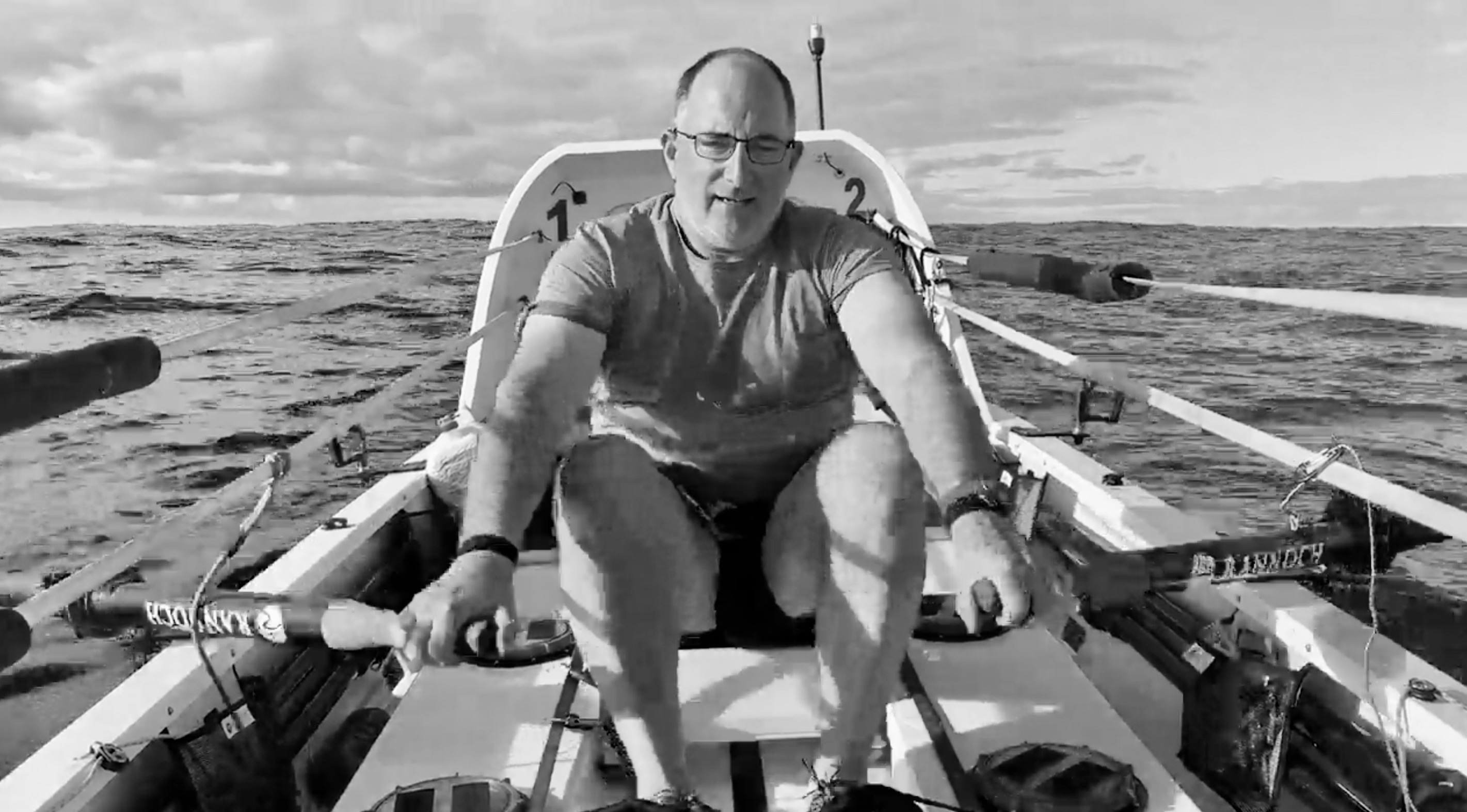
Competing in the Talisker Whisky Atlantic Challenge, mid-ocean Rowing 3,000 miles late last year across an ocean is the toughest thing I have done so far. With just over four months left to the start of this year’s Talisker Whisky Atlantic Challenge, I know how fortunate we were not to have had our training disrupted by a global pandemic. Yet the crews I know taking part this time have adapted well to cope, spending more time on their ergometers, pumping iron in their home-made gyms and honing the navigation, nutrition, and boat maintenance skills that will keep them alive when circumstances change. 

The nineteenth century military strategist Helmuth von Moltke maintained that no plan survives wholly intact after contact with the enemy. It’s a lesson we kept in mind during our row as key pieces of equipment broke, our power failed, and promised breaks in the weather failed to materialise.

It’s also a lesson I’ve applied in my day job as a communications director. Crisis communications strategies have to be flexible enough to cope with the unexpected, adaptable even in the heat of an apparent disaster, and honed through rehearsal. Persuading senior executives to take time out to prepare, to role play, stress test, and to learn with you, is vital.

Company directors and ocean rowers alike will do well to consider that crisis management isn’t just a manual to pick up and dust off when things go awry, it’s an approach and a mindset that will determine whether you succeed or fail.