Society is at risk from journalism cuts

Journalism is shrinking in plain sight and the scale of the collapse is far larger than most people realise. In the UK and US alone, more than 3,400 journalism jobs disappeared in 2025, according to the journalists’ trade magazine Press Gazette.

Entire newsrooms have been hollowed out, with January 2026 alone seeing nearly 1,000 layoffs.

These figures capture only the cuts large enough to be publicly announced; the real number is almost certainly higher. And the trend is not confined to digital‑only outlets or small local papers. Legacy broadcasters, national publishers, and global news organisations are all shedding reporters, editors, photographers, and producers at a pace that would have been unthinkable a decade ago.

The Washington Post’s decision to lay off more than 300 journalists, nearly a third of its newsroom, shows how deep the crisis has become.

A paper once defined by its global reporting and local accountability is closing its sports section, shrinking its metro desk, cutting international bureaus, and eliminating its daily news podcast. Entire teams were dismissed in minutes, including even correspondents reporting from war zones.

Leadership framed the cuts as a “necessary response” to falling traffic and a changing media landscape, but the result is unmistakable: fewer reporters covering fewer stories for fewer people.

What’s being lost is not just jobs. It’s the infrastructure that allows a society to understand itself. When local reporters disappear, corruption grows in the dark. When international bureaus close, global crises become remote, abstract things.

When investigative teams shrink, powerful institutions face less scrutiny. And when newsrooms are forced to chase scale rather than depth, public debate becomes thinner, louder, and easier to manipulate.

The damage is cumulative and largely invisible, until it isn’t. We may not feel the loss of a laid‑off reporter today, but we will feel the consequences when misinformation fills the gaps, when communities lose their watchdogs, and when democratic institutions weaken without anyone noticing.

Journalism is not just another industry in decline. It is a public good, and its erosion is a slow‑moving crisis that affects all of us, whether we’re paying attention or not.

Photo by Marek Pospíšil on Unsplash
Olympic boss’s threat to PR team: not a good look

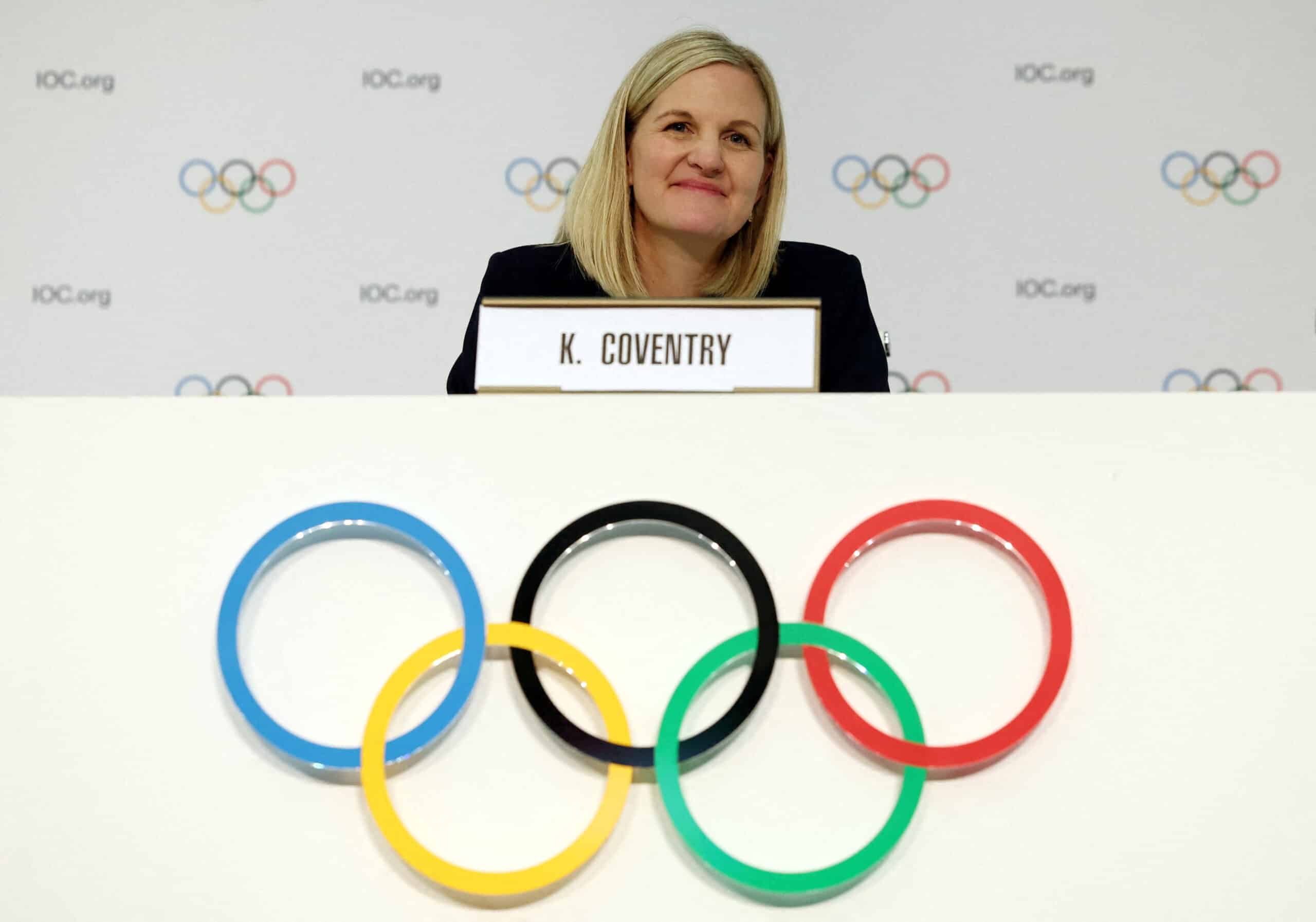
Kirsty Coventry, President of the International Olympic Committee, appeared to threaten a member of her public relations team with the sack mid-way through a post-Winter Olympic Games press conference after being blindsided by journalists’ questions.

IOC President Kirsty Coventry seated at a lectern featuring the Olympic rings
IOC President Kirsty Coventry

The awkward moment came after two questions for which she appeared unprepared. First, a reporter asked the IOC President if she had any comment about the reluctance of Germany to host the 2036 Olympic Games because they would take place in the centenary year of the Nazi-era Games in Berlin.

Coventry said she was unaware of any comments by Germany around the 2036 Olympic Games, adding: “So I don’t really have an opinion on it.”

A later question, about what the World Anti-Doping Agency (WADA) and the IOC knew of doping in Russia around the Sochi Games led to another pause. Coventry said she was not across that story either, and remarked, “OK, I’m really looking at my team and maybe someone needs to be dismissed because I’m not aware of that either. But I would be very interested to find out more about it.”

There was no need for this answer. In such situations, it’s always acceptable for a senior executive to say “I don’t know”. No one can be expected to have read every press report or have heard every story about an issue and to be able to answer questions about it.

The best response is to promise the journalist a call back later once the executive has had an opportunity to find out more.

“I’m sorry I can’t answer your question right now but I promise I’ll go and find out more and come back to you later today with a proper answer,” would be the model response in this situation.

Publicly throwing your PR team under the bus? Not so much.

Full disclosure, I worked at the IOC in Lausanne, Switzerland, from 2011-2013

AI won’t kill corporate communications, it’ll make it impossible to ignore

Those of us who work in communications hear a lot about how Artificial Intelligence (AI) is going to eat our lunch by wiping out our jobs and taking over ‘everything’.

As is usually the case with sweeping statements like this, the reality is somewhat different.

It’s true, AI is rapidly reshaping corporate communications. But while it will take over some tasks, others are still up for grabs.

Yes, AI is going to take over low-value, labour-intensive activities, there is not much question about that. But it will drive communicators to more valuable, strategic tasks.

As automation takes over routine things, like drafting press releases, managing distribution lists, and carrying out a lot of template-driven work, communicators will be freed up to focus on higher‑value work, such as advising executives how to root communications in their values and business strategy, and focusing on driving stakeholder engagement and trust.

AI-driven content generation does make us more efficient. It speeds up everything from drafting press releases to optimising headlines and search engine optimisation (SEO). This also ensures messaging is consistently refined for maximum engagement.

At the same time, hyper‑personalization allows companies to move beyond broad, generic outreach. Communications can now be tailored to individual preferences, behaviours, and contexts, at scale.

Predictive analytics is becoming a cornerstone of modern reputation management. With real‑time monitoring and trend forecasting, organizations can anticipate issues before they escalate, shifting from reactive crisis response to proactive reputation stewardship.

AI also enhances operational efficiency by automating scheduling, reporting, and meeting summaries, freeing communicators to focus on strategy and creativity.

Global teams benefit from real‑time multilingual translation tools such as DeepL, which eliminate language barriers and support seamless cross‑cultural collaboration. And as audiences increasingly rely on AI-generated answers, visibility will depend on appearing in AI-powered search results, a step beyond traditional SEO.

What does all this mean for communicators?

It’s mainly good news. Communications teams will need fewer people. But the jobs on offer will be more valuable, more strategic. Human judgment, such as context, nuance, and emotional intelligence, remains irreplaceable, even as AI handles tactical execution. New skills will emerge as essential: AI literacy, data interpretation, and ethical oversight.

AI isn’t replacing communicators, it’s elevating us. Those who embrace this partnership will, I believe, lead the next era of corporate storytelling.

Photo by Igor Omilaev on Unsplash

Switzerland’s immigration worries

Last year in Geneva I was approached by a political activitist and asked to put my name to a petition. I politely declined – and my reply elicited a shocking response.

I should explain, Swiss democracy works in a quirky way. Initiatives that attract more than 100,000 signatures (all are checked to ensure they’re bona fide Swiss voters) can be used to demand an amendment to the Federal Constitution. Continue reading

9 out of 10 statistics are bunkum

Journalists like to use them on quiet news days, but they’re not doing their readers much of a service by reprinting them.

I’m talking about self-serving press releases with phoney statistics. You know the type, “50% of Europeans not saving enough for retirement” (by retirement savings company); “Debt consolidation used by 40% of people” (by debt consolidation company); “60% of Britons don’t know their history, don’t visit enough sites of historical interest” (by a hotel chain). It’s the latter that’s proved a problem for British education secretary Michael Gove. Continue reading