Olympic boss’s threat to PR team: not a good look

Kirsty Coventry, President of the International Olympic Committee, appeared to threaten a member of her public relations team with the sack mid-way through a post-Winter Olympic Games press conference after being blindsided by journalists’ questions.
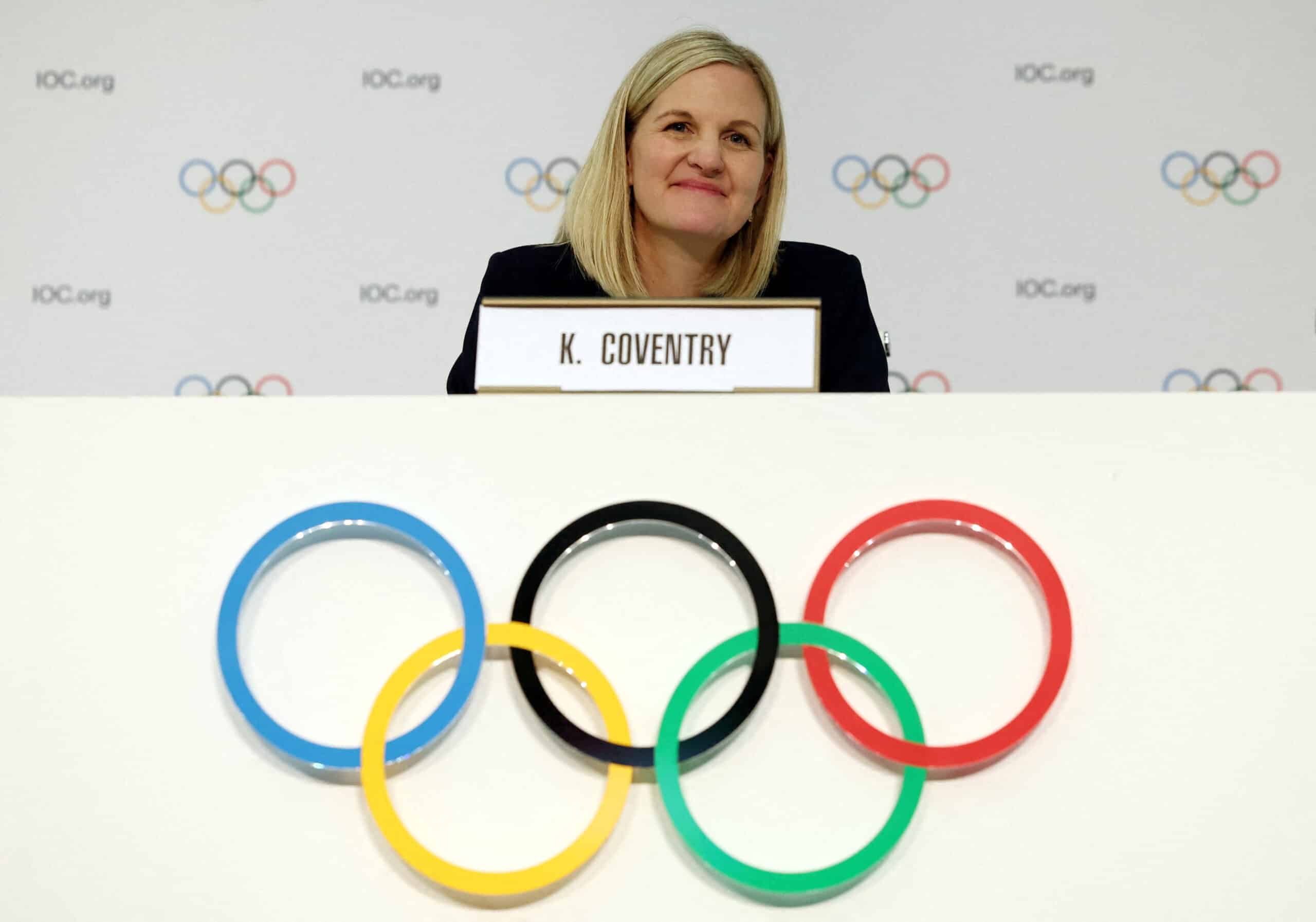
IOC President Kirsty Coventry seated at a lectern featuring the Olympic rings
IOC President Kirsty Coventry

The awkward moment came after two questions for which she appeared unprepared. First, a reporter asked the IOC President if she had any comment about the reluctance of Germany to host the 2036 Olympic Games because they would take place in the centenary year of the Nazi-era Games in Berlin.

Coventry said she was unaware of any comments by Germany around the 2036 Olympic Games, adding: “So I don’t really have an opinion on it.”

A later question, about what the World Anti-Doping Agency (WADA) and the IOC knew of doping in Russia around the Sochi Games led to another pause. Coventry said she was not across that story either, and remarked, “OK, I’m really looking at my team and maybe someone needs to be dismissed because I’m not aware of that either. But I would be very interested to find out more about it.”

There was no need for this answer. In such situations, it’s always acceptable for a senior executive to say “I don’t know”. No one can be expected to have read every press report or have heard every story about an issue and to be able to answer questions about it.

The best response is to promise the journalist a call back later once the executive has had an opportunity to find out more.

“I’m sorry I can’t answer your question right now but I promise I’ll go and find out more and come back to you later today with a proper answer,” would be the model response in this situation.

Publicly throwing your PR team under the bus? Not so much.

Full disclosure, I worked at the IOC in Lausanne, Switzerland, from 2011-2013
Starlink propels ocean rowing into the mainstream

Ocean rowing has always occupied that curious space between heroic endeavour and complete madness. For years it was the preserve of a few hardy souls who thought nothing of spending weeks in a tiny boat, eating freeze‑dried food and talking to themselves somewhere between the Canary Islands and Antigua. Admirable, yes. Mainstream? Not quite.

But something has shifted. The sport is no longer a remote curiosity followed by a handful of enthusiasts refreshing race trackers at odd hours. Thanks to Starlink, ocean rowing has become a spectator event, one that people can actually follow, understand and, increasingly, aspire to.

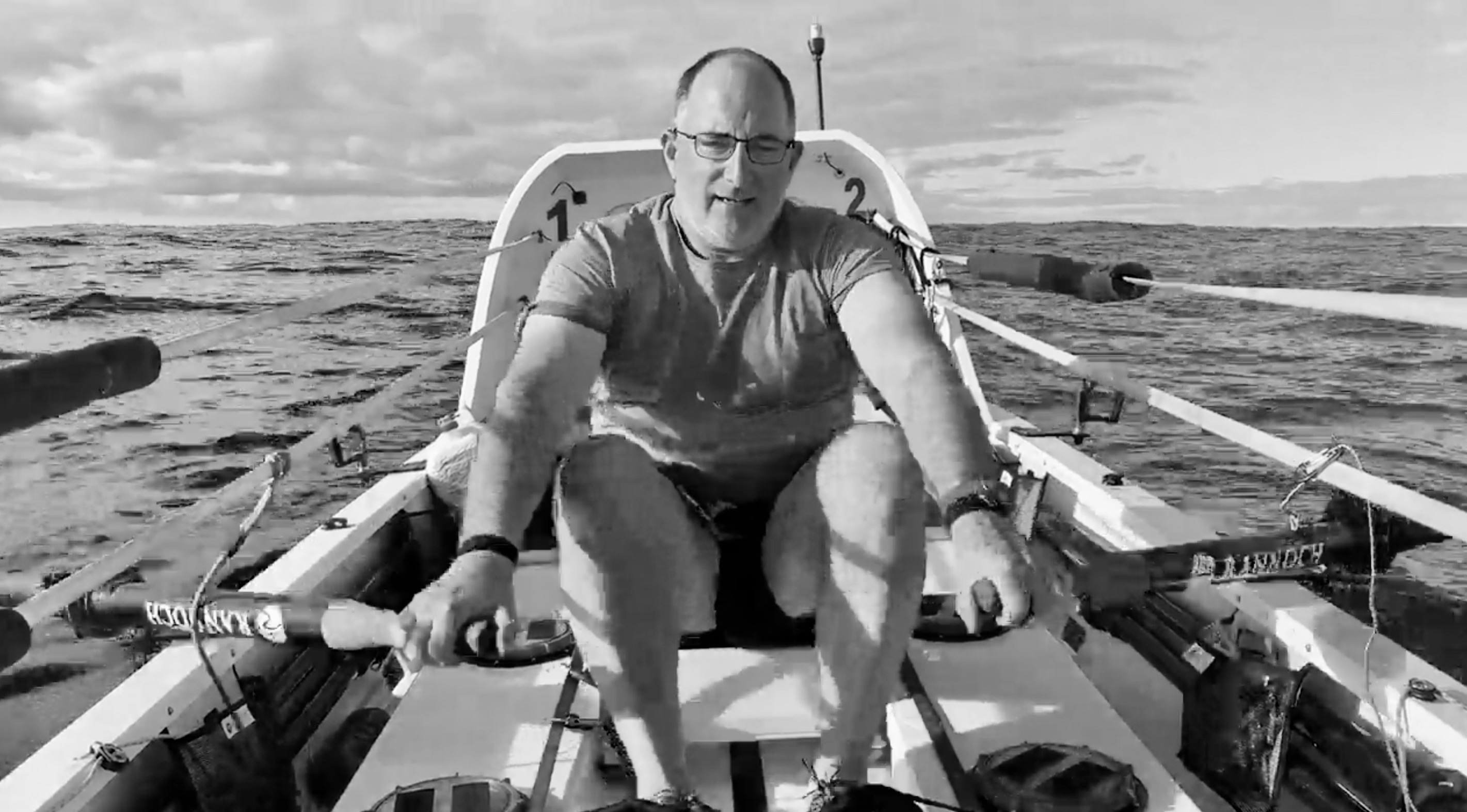
Rower Guy Dresser at the oars on what was the Talisker Whiskey Atlantic Challenge, now known as the world's toughest row
Guy Dresser mid-Atlantic in 2019

The change is simple but profound: connectivity. Until recently, rowers vanished the moment they left the harbour.

Updates were sporadic, satellite phones unreliable, and footage almost non‑existent.

Now, with Starlink bolted to the stern, crews livestream squalls, post videos of dolphins pacing the bow, and send daily dispatches from the middle of nowhere.

The Atlantic, once a vast communications void, has become strangely chatty.

This has done wonders for the visibility of the World’s Toughest Row. Races that used to unfold in near‑silence now generate real‑time drama. Followers can watch crews battle headwinds, celebrate milestones, or attempt to fix an oarlock at 3am.

Sponsors, once wary of investing in something that disappeared for six weeks, suddenly see value in a sport that can deliver content every day. And for the rowers themselves, the psychological lift of being able to speak to family, or simply know they’re not shouting into the void is no small thing.

Of course, purists grumble that constant connectivity dilutes the essence of the challenge. But the race itself remains unchanged: the ocean is still enormous, the boats still tiny, and the rowing still brutally hard. What’s different is that the rest of the world can finally witness what we see as rowers.

Starlink hasn’t made ocean rowing easier; it has made it visible. And in doing so, it has nudged a once‑obscure pursuit into the edges of the mainstream, where it may yet find the wider audience it deserves.

How rowing an ocean helped me with lockdown

A trio, but a team nonetheless! Team Margot pictured mid-ocean during the Talisker Whisky Atlantic Challenge 2019. Photo: Atlantic Campaigns

This time last year, I was preparing to take on the biggest challenge of my life so far, rowing thousands of miles across the Atlantic Ocean in a small boat.

As competitors in this year’s Talisker Whisky Atlantic Challenge rowing race get ready to leave this week from the Canary Islands and slog all the way to Antigua some 3,000 miles (5,000 km) away, I am reflecting on the lessons I learned from last year‘s event and assess how it helped me cope with lockdown. 

There’s no question that preparing for Atlantic rowing competition is a unique experience. Competitors typically take 35-50 days or so to reach the other side of the ocean, and it’s an ordeal, albeit one that will include many incredible highs as well as some unbelievable lows. 

Coping with severe weather and ongoing medical issues (like blisters, chafing, sea sickness, severe fatigue, and hallucinations), while managing running boat repairs, means that just keeping going is a constant challenge. 

Continue reading

Crisis? What crisis?

Competing in the Talisker Whisky Atlantic Challenge, mid-ocean Rowing 3,000 miles late last year across an ocean is the toughest thing I have done so far. With just over four months left to the start of this year’s Talisker Whisky Atlantic Challenge, I know how fortunate we were not to have had our training disrupted by a global pandemic. Yet the crews I know taking part this time have adapted well to cope, spending more time on their ergometers, pumping iron in their home-made gyms and honing the navigation, nutrition, and boat maintenance skills that will keep them alive when circumstances change. 

The nineteenth century military strategist Helmuth von Moltke maintained that no plan survives wholly intact after contact with the enemy. It’s a lesson we kept in mind during our row as key pieces of equipment broke, our power failed, and promised breaks in the weather failed to materialise.

It’s also a lesson I’ve applied in my day job as a communications director. Crisis communications strategies have to be flexible enough to cope with the unexpected, adaptable even in the heat of an apparent disaster, and honed through rehearsal. Persuading senior executives to take time out to prepare, to role play, stress test, and to learn with you, is vital.

Company directors and ocean rowers alike will do well to consider that crisis management isn’t just a manual to pick up and dust off when things go awry, it’s an approach and a mindset that will determine whether you succeed or fail. 

Atlantic rowing: what it’s like

A short film detailing our participation in the Talisker Whisky Atlantic Challenge is now out! It’s an amateur effort, but gives an idea of the scale of the task we faced.

Rowing 3,000 miles across the Atlantic Ocean as Team Margot Atlantic Rowers was an epic experience. It’s hard to begin to describe it without lapsing into an adjectival soup.

We took 39 days to get from La Gomera in the Canary Islands to Antigua. And there were many highs and lows.

Our crossing was marked by astonishingly bad weather in the first 48 hours, huge waves that tested our surfing skills, strong winds, several days of flat calm and painfully slow progress, plus numerous remarkable encounters with wildlife. We never tired of the view – we saw the Atlantic in all its majesty, and it was always a sight to behold. So too was the night sky which, free of any light pollution, allowed our minds to absorb the miracle of life itself.

On a more mundane level, we suffered along with the rest of the fleet: various injuries, foot infections, bruising, chafing, extreme fatigue, hallucinations, seasickness, mood swings, equipment failure, electrical problems and occasional despair when we doubted our navigation advice and managed to row further than anyone else in this year’s race. But all this paled into insignificance when set against the magnificence of crossing the Atlantic to reach Antigua.

So were we changed by the experience? For Martin, Hamish and me, rowing the Atlantic was the culmination of a 20 year ambition. Sadly, with the Covid-19 crisis now enveloping the world, it has been hard from our respective lockdowns to gain the perspective from which to judge how we feel about it.

It has, however, confirmed the maxim of my other half which is that if you really want to do something, you need to work out how to go and do it. And don’t let anyone else tell you that you can’t!

We took part in the row to raise awareness of the global Stem Cell and Bone Marrow Register. You can find out more at www.werowyouregister.org – please, please sign up…you could save a life!