Society is at risk from journalism cuts

Journalism is shrinking in plain sight and the scale of the collapse is far larger than most people realise. In the UK and US alone, more than 3,400 journalism jobs disappeared in 2025, according to the journalists’ trade magazine Press Gazette.

Entire newsrooms have been hollowed out, with January 2026 alone seeing nearly 1,000 layoffs.

These figures capture only the cuts large enough to be publicly announced; the real number is almost certainly higher. And the trend is not confined to digital‑only outlets or small local papers. Legacy broadcasters, national publishers, and global news organisations are all shedding reporters, editors, photographers, and producers at a pace that would have been unthinkable a decade ago.

The Washington Post’s decision to lay off more than 300 journalists, nearly a third of its newsroom, shows how deep the crisis has become.

A paper once defined by its global reporting and local accountability is closing its sports section, shrinking its metro desk, cutting international bureaus, and eliminating its daily news podcast. Entire teams were dismissed in minutes, including even correspondents reporting from war zones.

Leadership framed the cuts as a “necessary response” to falling traffic and a changing media landscape, but the result is unmistakable: fewer reporters covering fewer stories for fewer people.

What’s being lost is not just jobs. It’s the infrastructure that allows a society to understand itself. When local reporters disappear, corruption grows in the dark. When international bureaus close, global crises become remote, abstract things.

When investigative teams shrink, powerful institutions face less scrutiny. And when newsrooms are forced to chase scale rather than depth, public debate becomes thinner, louder, and easier to manipulate.

The damage is cumulative and largely invisible, until it isn’t. We may not feel the loss of a laid‑off reporter today, but we will feel the consequences when misinformation fills the gaps, when communities lose their watchdogs, and when democratic institutions weaken without anyone noticing.

Journalism is not just another industry in decline. It is a public good, and its erosion is a slow‑moving crisis that affects all of us, whether we’re paying attention or not.

Photo by Marek Pospíšil on Unsplash
Olympic boss’s threat to PR team: not a good look

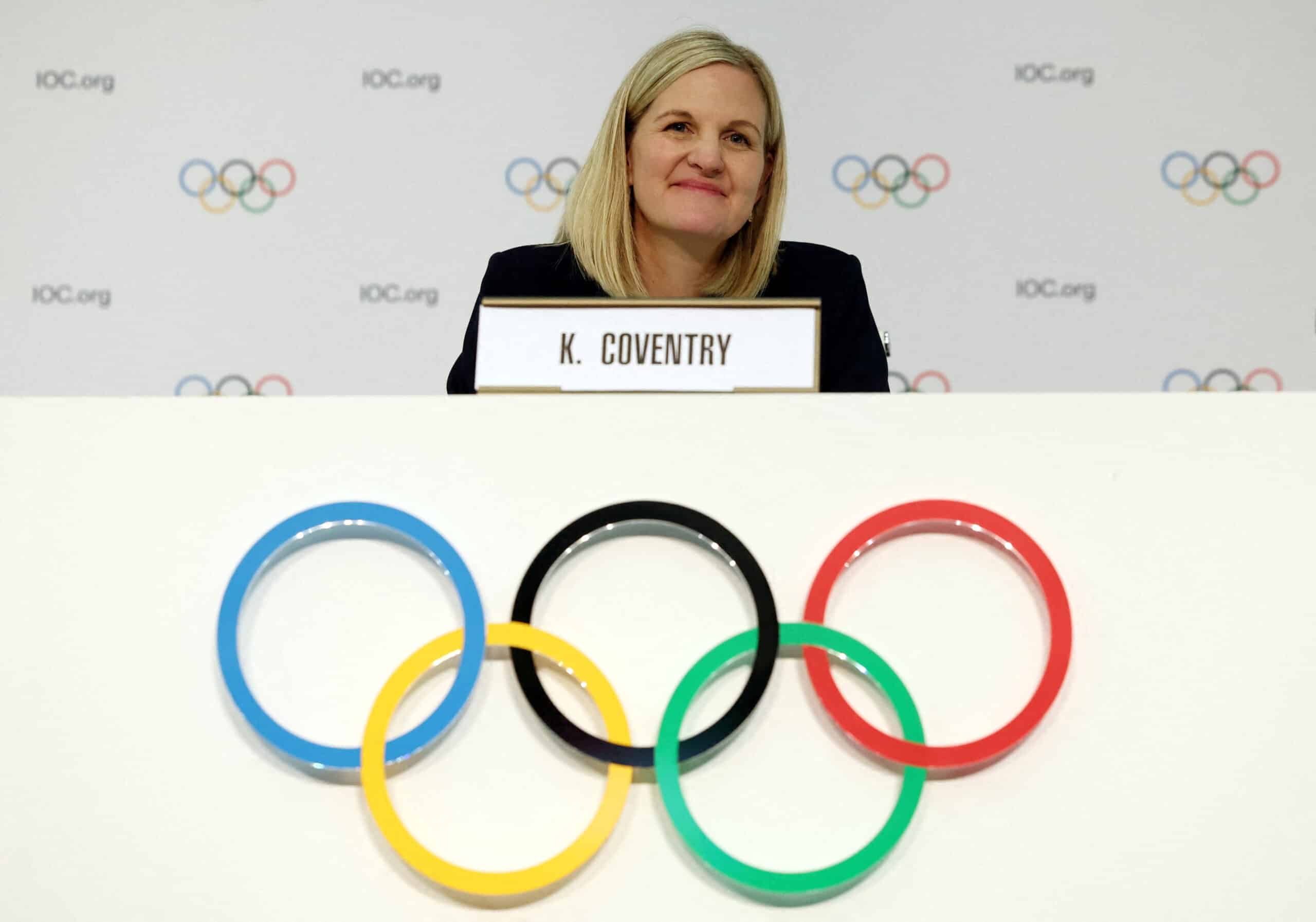
Kirsty Coventry, President of the International Olympic Committee, appeared to threaten a member of her public relations team with the sack mid-way through a post-Winter Olympic Games press conference after being blindsided by journalists’ questions.

IOC President Kirsty Coventry seated at a lectern featuring the Olympic rings
IOC President Kirsty Coventry

The awkward moment came after two questions for which she appeared unprepared. First, a reporter asked the IOC President if she had any comment about the reluctance of Germany to host the 2036 Olympic Games because they would take place in the centenary year of the Nazi-era Games in Berlin.

Coventry said she was unaware of any comments by Germany around the 2036 Olympic Games, adding: “So I don’t really have an opinion on it.”

A later question, about what the World Anti-Doping Agency (WADA) and the IOC knew of doping in Russia around the Sochi Games led to another pause. Coventry said she was not across that story either, and remarked, “OK, I’m really looking at my team and maybe someone needs to be dismissed because I’m not aware of that either. But I would be very interested to find out more about it.”

There was no need for this answer. In such situations, it’s always acceptable for a senior executive to say “I don’t know”. No one can be expected to have read every press report or have heard every story about an issue and to be able to answer questions about it.

The best response is to promise the journalist a call back later once the executive has had an opportunity to find out more.

“I’m sorry I can’t answer your question right now but I promise I’ll go and find out more and come back to you later today with a proper answer,” would be the model response in this situation.

Publicly throwing your PR team under the bus? Not so much.

Full disclosure, I worked at the IOC in Lausanne, Switzerland, from 2011-2013

Why the Mandelson and Andrew footage is so compelling

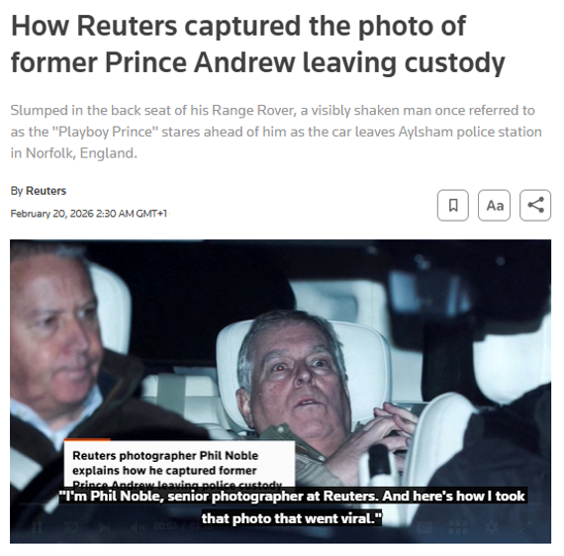
There’s something undeniably gripping about the recent clip of Britain’s former US ambassador Peter Mandelson being arrested and the Reuters photo of Andrew Mountbatten‑Windsor returning home from the police station. It isn’t just the shock of seeing two establishment figures caught in moments of acute vulnerability.

It’s the fact that Britain, a country that prides itself on discretion and due process, has stumbled into something resembling the American perp walk, that strange ritual where the accused is paraded before the cameras, handcuffed and flanked by officers, as if shame were part of the judicial process.

That’s not really the done thing in the UK. British justice normally prefers quiet corridors, closed doors and the gentle hum of paperwork.

But the sight of Mandelson being led away, or Andrew being driven along in a car with the unmistakable look of a man who has just spent several hours answering questions he’d rather not, taps into a deep cultural curiosity. These are people who have spent their lives insulated from scrutiny. Seeing them suddenly exposed feels like a crack in the façade of power.

The American perp walk is designed to send a message: no one is above the law, and the public has a right to witness accountability. It’s theatre, of course, carefully choreographed, often criticised, but undeniably effective.

In the UK, the legal system tends to recoil from such spectacle. Yet when it happens accidentally, as it has here, we can’t look away. The footage feels illicit, like we’re seeing something we’re not supposed to. It’s the contrast that makes it compelling: the grandeur of their former lives colliding with the spectre of legal consequence.

What these moments reveal is how powerful visual accountability can be. A written statement can be parsed, spun or ignored. But a man stepping out of a police station at dusk, shoulders tight, eyes fixed on the ground? That image lingers. It tells a story no press release ever could.

Starlink propels ocean rowing into the mainstream

Ocean rowing has always occupied that curious space between heroic endeavour and complete madness. For years it was the preserve of a few hardy souls who thought nothing of spending weeks in a tiny boat, eating freeze‑dried food and talking to themselves somewhere between the Canary Islands and Antigua. Admirable, yes. Mainstream? Not quite.

But something has shifted. The sport is no longer a remote curiosity followed by a handful of enthusiasts refreshing race trackers at odd hours. Thanks to Starlink, ocean rowing has become a spectator event, one that people can actually follow, understand and, increasingly, aspire to.

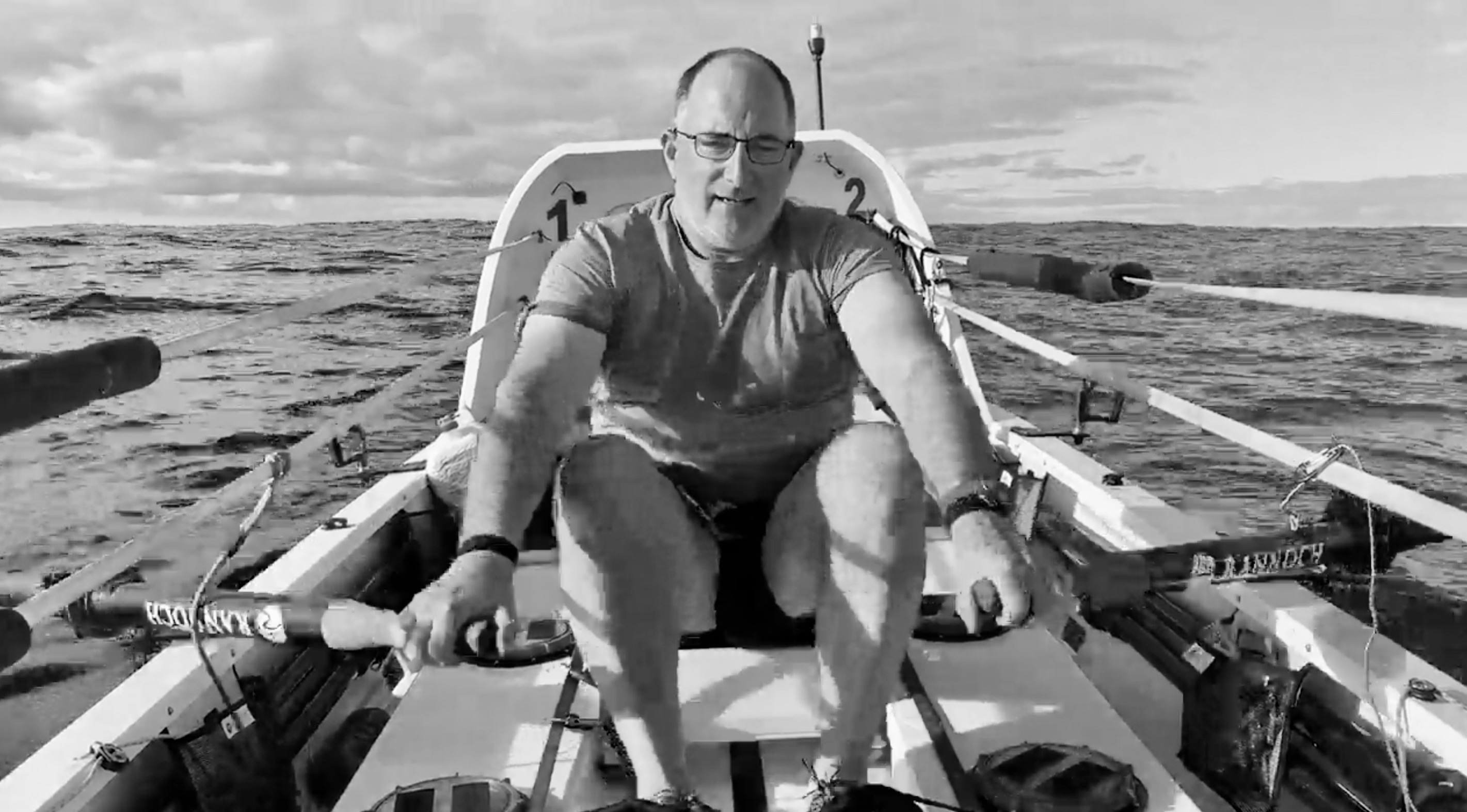
Rower Guy Dresser at the oars on what was the Talisker Whiskey Atlantic Challenge, now known as the world's toughest row
Guy Dresser mid-Atlantic in 2019

The change is simple but profound: connectivity. Until recently, rowers vanished the moment they left the harbour.

Updates were sporadic, satellite phones unreliable, and footage almost non‑existent.

Now, with Starlink bolted to the stern, crews livestream squalls, post videos of dolphins pacing the bow, and send daily dispatches from the middle of nowhere.

The Atlantic, once a vast communications void, has become strangely chatty.

This has done wonders for the visibility of the World’s Toughest Row. Races that used to unfold in near‑silence now generate real‑time drama. Followers can watch crews battle headwinds, celebrate milestones, or attempt to fix an oarlock at 3am.

Sponsors, once wary of investing in something that disappeared for six weeks, suddenly see value in a sport that can deliver content every day. And for the rowers themselves, the psychological lift of being able to speak to family, or simply know they’re not shouting into the void is no small thing.

Of course, purists grumble that constant connectivity dilutes the essence of the challenge. But the race itself remains unchanged: the ocean is still enormous, the boats still tiny, and the rowing still brutally hard. What’s different is that the rest of the world can finally witness what we see as rowers.

Starlink hasn’t made ocean rowing easier; it has made it visible. And in doing so, it has nudged a once‑obscure pursuit into the edges of the mainstream, where it may yet find the wider audience it deserves.

When PR won’t save a leader’s reputation

Every communications adviser knows there are moments when their job shifts from shaping a message to quietly bracing for impact. I have a real-life example from early in my communications career.

A senior executive stood in front of a room full of his employees, announced they were – sadly – all being made redundant, and then, beaming, shared that he’d just been promoted.

“Every cloud has a silver lining,” he added, as if delivering a line from a corporate pantomime. It was a pure David Brent moment: excruciating, tone‑deaf and instantly unforgettable. (David Brent, if you don’t know, is the hapless, out-of-his-depth corporate manager portrayed in Ricky Gervais’s excoriating series The Office, also reshot for the US market with the brilliant Steve Carell in the lead.)

What makes these gaffes so damaging is that they reveal something PR can’t fix: character. A poorly worded memo can be rewritten. A clumsy interview can be reframed. But when an executive publicly displays a catastrophic lack of empathy, the problem isn’t the message, it’s the messenger. No amount of media training can retrofit emotional intelligence into someone who doesn’t instinctively understand the weight of their words.

These moments also spread with remarkable speed. Employees these days could record them and share them on social media. Fortunately my example took place long before 4G and iphones became a thing.

Still, our executive’s faux pas was leaked to the Guardian newspaper and was published long before the communications team had even drafted a holding statement. By the time PR arrived to mop up, the story had already become a symbol: of arrogance, of detachment, of leadership gone wrong. And symbols are far harder to manage than stories.

The deeper issue is that executives often underestimate how closely people watch them. In times of uncertainty, every gesture is amplified. A misplaced joke becomes a verdict on leadership. A careless aside becomes evidence of indifference. When livelihoods are at stake, humour is not a bridge, it’s a trapdoor.

This is why the most effective protection for executives isn’t spin; it’s self‑awareness. The ability to read a room, to understand the emotional temperature, to recognise when silence is wiser than wit. PR can polish, guide and prepare, but it cannot save someone determined to sabotage themselves in public.

The lesson is simple: leaders don’t just communicate strategy, they communicate values. And when those values appear hollow, no adviser on earth can put them back together.

Photo by Pablo Varela on Unsplash