Another day, another paddling magazine. At least, that’s how it felt in late 2012 when two titles called “The Paddler” emerged and I spent hours a week indulging a shameful habit on the internet. That’s, er, scouring the web for the plethora of canoe-related e-zines out there, in case you were wondering.
I glimpsed what might have been signs of new thinking at the BCU when I heard that the publishing of Canoe Focus was being contracted out. I wondered if this would be the governing body’s ‘moment’ when it went digital. But, no, it turned out to be just a bit of a redesign and a ‘new’ magazine which, to my untutored eye, looked pretty similar to what went before – and which I never really bothered to read either. Continue reading
Author Archives: guydresser
Une Histoire D’Equilibre
French three-time Olympic gold medalist Tony Estanguet has published his autobiography. The book, “A story of balance” (or, more accurately, “Une Histoire D’Equilibre”) is an account of his life in canoeing, how he got to the top and how he survived there.
From the early days watching his father Henri and older brother Patrice winning, respectively, world championship titles and an Olympic bronze medal Estanguet tracks his own progress towards success at two Olympic Games (gold in Sydney and Athens), discusses how he felt about disappointment in Beijing (9th place) and how he bounced back to win gold in London. Continue reading
Doping: a journalistic failure?
So why did the media apparently fail to uncover the doping scandal in cycling? Sunday Times journalist David Walsh, who followed Lance Armstrong closely for years and was the subject of a libel case as a result, thinks it was for two reasons:
Firstly, coverage was heavily influenced by the cyclist’s battle with cancer. Secondly, journalists weren’t sufficiently detached – they’d become “fans with typewriters”. Continue reading
Life jacket or buoyancy aid?
Press coverage after a canoeing tragedy tends to focus on the safety precautions that those involved took. Often one reads the throwaway line ‘the victim was not wearing a lifejacket’, journalistic short-hand for ‘the person involved took inadequate precautions and therefore bears some responsibility for the fact that he or she perished’.
In the case of the recent canoeing accident on Loch Gairloch in the Scottish Highlands that claimed the lives of four people, three of them children and one aged just two, one of the survivors, Garry Mackay, has described how the children were wearing what a news website described as “buoyancy aid jackets”. Continue reading
What to do when the Olympic career’s over
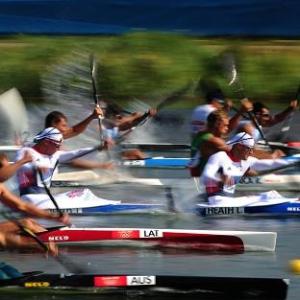 Olympic gold medalist Tim Brabants knows better than most how important it is to have a career you can turn to when the sports career finishes. The sprint kayaker is a qualified doctor and will return to medicine whenever he eventually hangs up his paddles.
He’s not “lucky”, he’s just fortunate in that he planned ahead. Others are not so fortunate. Many sportsmen and women find that after one or two decades of sacrificing absolutely everything for their sport they struggle to fit back into “normal” life, sometimes lacking the qualifications or work experience to attract an employer. Continue reading
 guy dresser